
Project-driven businesses across Canada — from construction firms in Alberta to professional services companies in Ontario — are under constant pressure to deliver work on time, on budget, and without losing sight of profitability. Spreadsheets and disconnected tools simply can't keep up with the complexity of multi-phase projects, distributed teams, and provincial compliance requirements. That's why more organizations are turning to reliable NetSuite services in Canada to bring project planning, resource management, and financials together on a single cloud platform.
In this post, we'll break down how Canadian companies are using NetSuite for project management, the features driving adoption, and why it's becoming the go-to ERP solution for project-based businesses nationwide.
Why Canadian Businesses Are Turning to NetSuite
Canadian companies operate in a unique environment — multiple currencies, provincial tax rules, and often teams spread across time zones. NetSuite's project management module was built to handle exactly this kind of complexity. Instead of juggling separate systems for accounting, resource scheduling, and project tracking, businesses get a unified view of every job, from the initial quote to the final invoice.
This consolidation is especially valuable for industries like construction, engineering, consulting, and professional services, where project margins can shrink quickly if costs aren't tracked in real time.
Core Project Management Capabilities
Real-Time Project Tracking
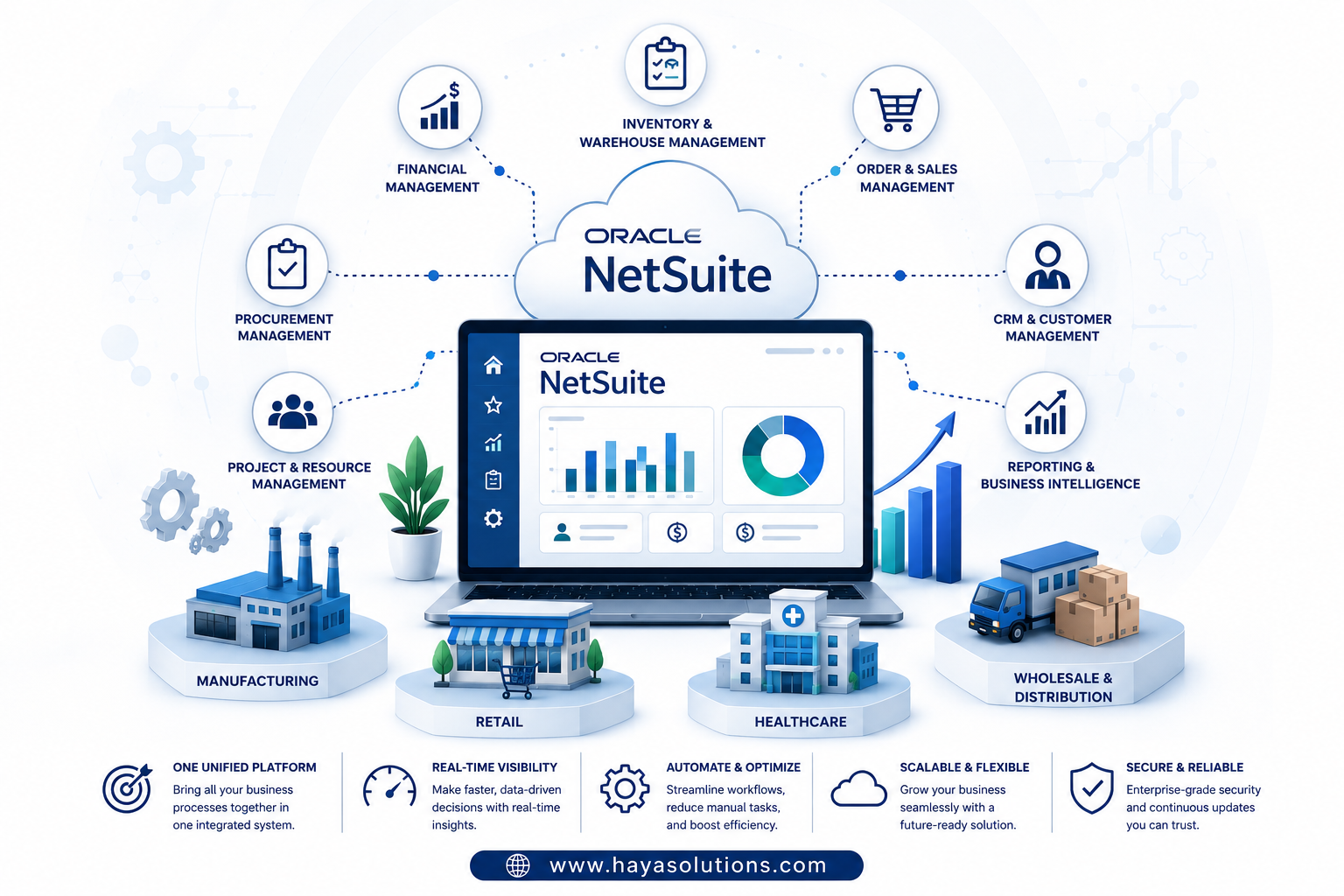
NetSuite gives project managers a live dashboard of task status, budget consumption, and resource allocation. Rather than waiting for a month-end report, teams can spot cost overruns or schedule slippage as they happen and course-correct immediately.
Resource and Time Management
Assigning the right people to the right projects is one of the biggest challenges for growing companies. NetSuite's resource management tools let managers view team availability, skill sets, and current workload before making assignments—reducing bottlenecks and burnout.
Integrated Financials
Because NetSuite is an ERP at its core, project data isn't isolated. Time entries, expenses, and billing all flow directly into the general ledger. This means Canadian finance teams can generate accurate project profitability reports without manually reconciling data between systems — a major advantage during tax season or audits.
Multi-Currency and Multi-Subsidiary Support
For companies operating across provinces or with U.S. and international clients, NetSuite handles multi-currency transactions and consolidates financials across subsidiaries automatically. This is a critical feature for Canadian firms managing cross-border projects.
Customizable Dashboards and Reporting
Every project team has different KPIs. NetSuite allows businesses to build custom dashboards showing exactly what matters — whether that's billable utilization, project margin, or milestone completion — so leadership can make faster, data-backed decisions.
Industry-Specific Use Cases in Canada
Construction and Engineering: Firms use NetSuite to manage complex, long-duration projects with multiple subcontractors, tracking costs against budgets in real time to protect thin margins.
Professional Services: Consulting and agency businesses rely on NetSuite to track billable hours, manage client budgets, and automate invoicing tied directly to project milestones.
Manufacturing and Distribution: Companies managing custom orders or large-scale rollouts use NetSuite to connect project timelines with inventory and procurement, ensuring materials arrive exactly when needed.
Beyond traditional project-based industries, growing online retailers are also benefiting. NetSuite for e-commerce businesses in Canada is gaining traction because it connects order management, inventory, and fulfillment with the same project and financial visibility used across the rest of the organization—giving fast-growing online brands a single source of truth as they scale.
The Advantage of Working with a Local NetSuite Partner
While NetSuite's platform is powerful out of the box, Canadian companies get the most value when implementation is tailored to local tax rules, currency requirements, and industry workflows. Working with an experienced implementation partner ensures:
Faster, smoother onboarding with minimal disruption to ongoing projects
Configuration aligned with Canadian compliance and reporting standards
Custom workflows built around how your teams actually operate
Ongoing support as your business scales and project complexity grows
Rather than adopting a generic, one-size-fits-all setup, businesses that partner with local experts see NetSuite become a true extension of how they manage work — not just another tool to maintain.
Final Thoughts
Project management success in Canada increasingly depends on real-time visibility into budgets, resources, and timelines — all of which are connected to the financial side of the business. NetSuite delivers exactly that, giving companies the tools to plan smarter, execute faster, and protect profitability on every project.
If your organization is ready to move beyond spreadsheets and disconnected systems, now is the time to explore how a tailored NetSuite implementation can transform the way your teams manage projects from start to finish.


Write a comment ...